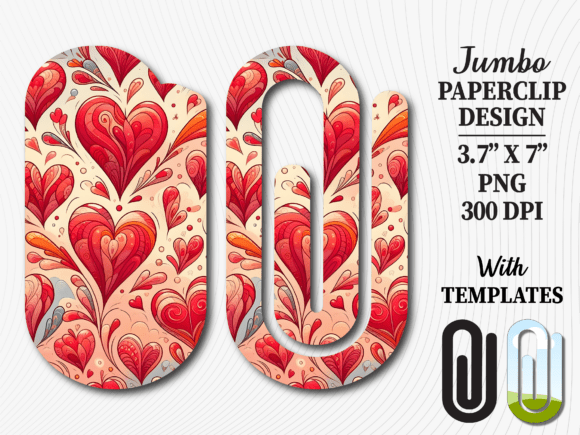
Red Heart Valentines Day Jumbo Paperclip
A Designer’s First Glance: Playful, Not Precious
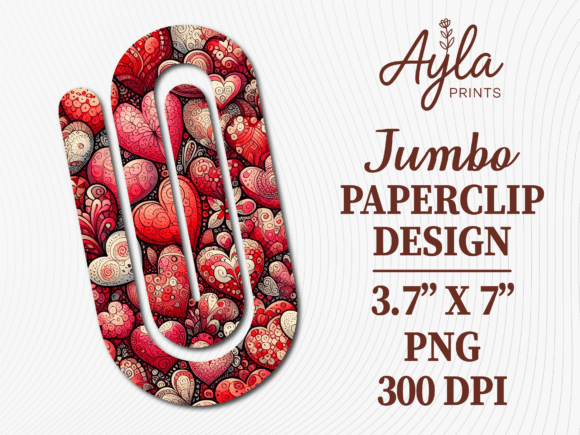
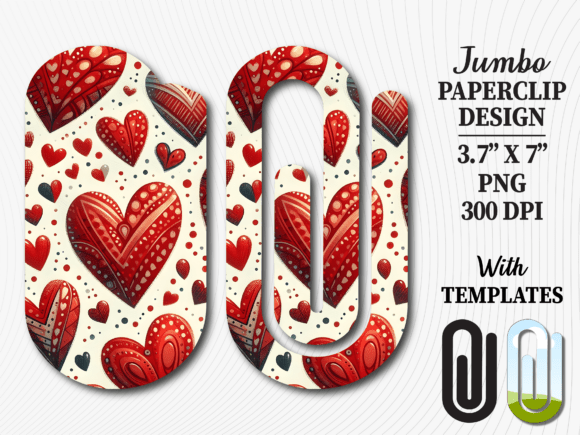
When I opened the Red Heart Valentines Day Jumbo Paperclip file, my first thought wasn’t “cute” — it was “confident.” This isn’t a shy heart tucked into a corner; it’s a bold, stylized paperclip holding a vibrant red heart front and center. The shape is clean, slightly rounded, with subtle weight in the curves — not cartoonish, but friendly. It reads instantly as Valentine’s Day without leaning on clichés like doves or lace. As a designer who regularly selects embroidery files for client projects and small-batch production, I appreciated how the layout leaves breathing room around the heart and clip body — no awkward crowding or fragile negative space that might vanish under dense stitching.
Where It Shines: Real Projects, Real Fabric
I tested Red Heart Valentines Day Jumbo Paperclip across three real-world applications: a cotton twill tote bag for a local boutique, a lightweight organic cotton baby onesie, and a midweight terry cloth kitchen towel. On the tote, it stitched cleanly at 3.5" wide — the satin-stitched outer edge of the paperclip held crisp definition, and the heart’s fill stitch stayed smooth, even over the fabric’s subtle texture. On the onesie, I used a lightweight cutaway stabilizer and reduced density by 10% — the design retained its charm without stiffness or puckering. And on the towel? Surprisingly effective — the contrast between the plush loops and the clean lines made the heart pop, especially when paired with a rich burgundy thread.
This design naturally belongs on products where personality meets practicality: embroidered patches for craft fair pins, sweatshirt chest logos for teen gift sets, pillow covers for nursery decor, and aprons for bakeries or florists launching seasonal collections. It’s also a smart choice for Etsy sellers offering personalized gifts — think “Emma’s First Valentine’s” stitched beside the heart, or “Team Love” on a matching family set. Its simplicity gives it commercial flexibility without sacrificing handmade warmth.
Where to Pause — Not Every Surface Is Equal
That confidence has limits — and knowing them saves time and thread. Red Heart Valentines Day Jumbo Paperclip doesn’t translate well to very small hoop sizes (under 4"). The subtle taper of the paperclip ends and the clean curve where heart meets clip need room to resolve. On highly textured fabrics like bouclé or heavy corduroy, those fine transitions can blur unless you adjust stitch type — consider swapping dense fill for a lighter tatami or stipple fill in the heart area.
Stretchy fabrics (think ribbed knit tees or baby leggings) require extra care: use a tear-away + cutaway hybrid stabilizer and slow your machine speed. Dark fabrics demand thoughtful thread selection — a matte red or deep cherry works better than glossy scarlet, which can look plasticky under light. And avoid placing it directly over seams or curved surfaces like cap fronts without digitizing adjustments — the paperclip’s straighter sections may distort.
What Your Customers Actually Notice
Here’s what matters beyond stitch count: recognition, trust, and perceived value. When someone sees this on a handmade tote, they don’t read “sublimation design” — they read “thoughtful, cheerful, intentional.” That impression lifts the whole product. It signals care in curation, not just execution. For craft businesses, that translates to higher perceived value and repeat buyers. For Etsy sellers, it boosts engagement — shoppers linger longer on listings where the design feels cohesive, not generic. And for personalized gifts? It adds emotional resonance without being overly sentimental — perfect for teachers, nurses, or friends who appreciate wit alongside warmth.
Practical Notes from My Embroidery Hoop
- Always test first — run a sample on scrap fabric matching your final project’s weight and stretch.
- Check thread color contrast on both light and dark backgrounds before stitching the final piece.
- Review stitch density — if your machine struggles with tight fills, reduce density by 5–8% rather than scaling down size.
- Confirm hoop size compatibility — this design likely fits standard 5x7 hoops, but verify before hooping expensive fabric.
- Inspect small details in your embroidery software: are the paperclip’s inner curves fully digitized? Does the heart attach seamlessly?
- Test black-and-white mockups — if it reads clearly without color, your stitch clarity is strong.
- Use proper stabilizer — lightweight cutaway for knits, medium cutaway for woven apparel, tear-away + topping for towels.
- Verify licensing — since this is labeled a Graphics product in the Crafts category, confirm whether the digital embroidery file permits commercial use of finished items or resale of the design itself.
Final Thought: A Reliable Spark, Not a Fad
The Red Heart Valentines Day Jumbo Paperclip won’t win awards for complexity — and it shouldn’t. Its strength is clarity, versatility, and quiet charm. It’s the kind of machine embroidery design that disappears into the product while elevating it: functional enough for a coffee shop’s staff apron, sweet enough for a baby’s milestone blanket, polished enough for a boutique’s holiday collection. As an embroidery product reviewer and working designer, I reach for pieces like this when I need reliability, not reinvention. It’s not background noise — it’s a confident, compact statement. And in a crowded market of handmade goods, that kind of intention makes all the difference.